




Vitamines pour la préménopause, idéales dès 40 ans
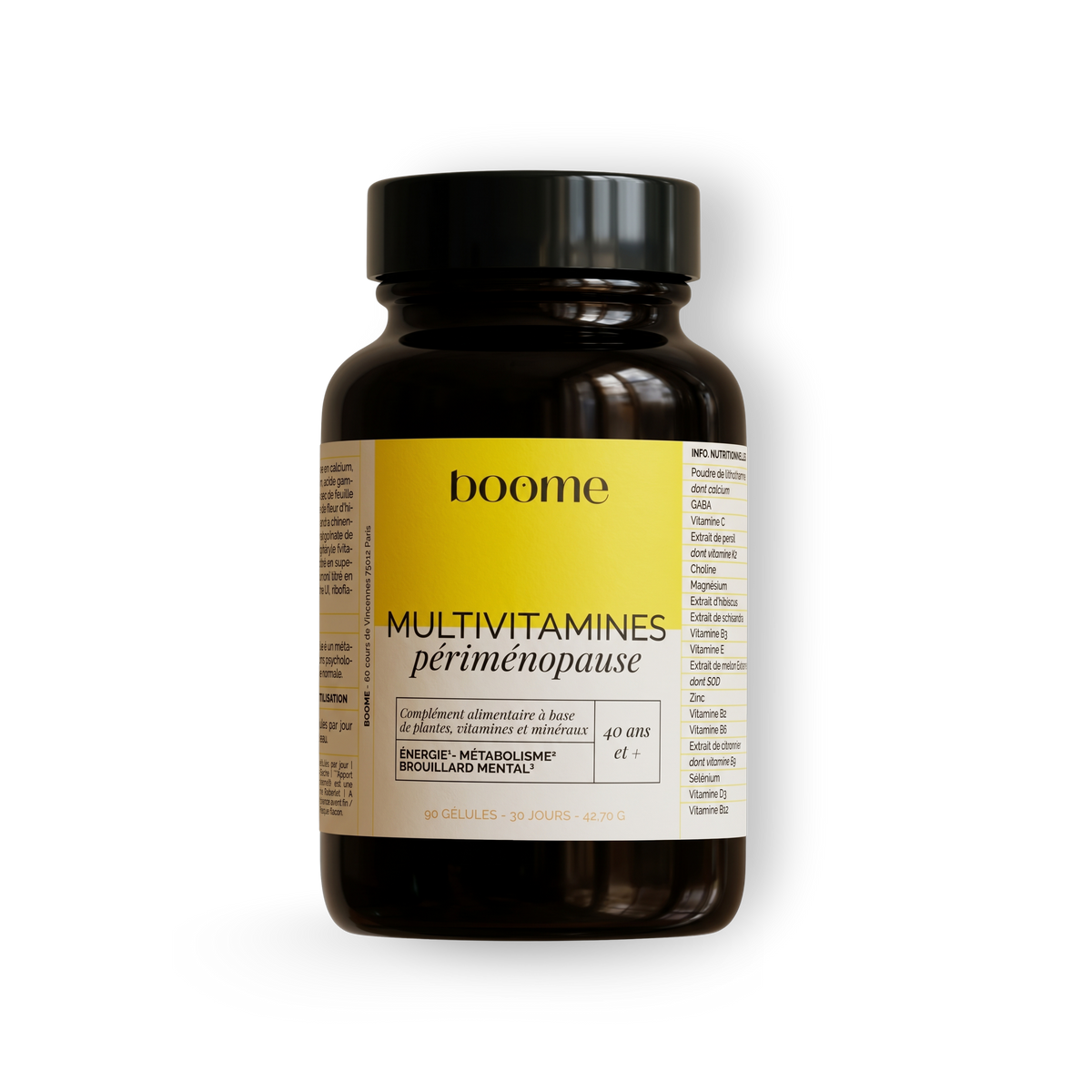
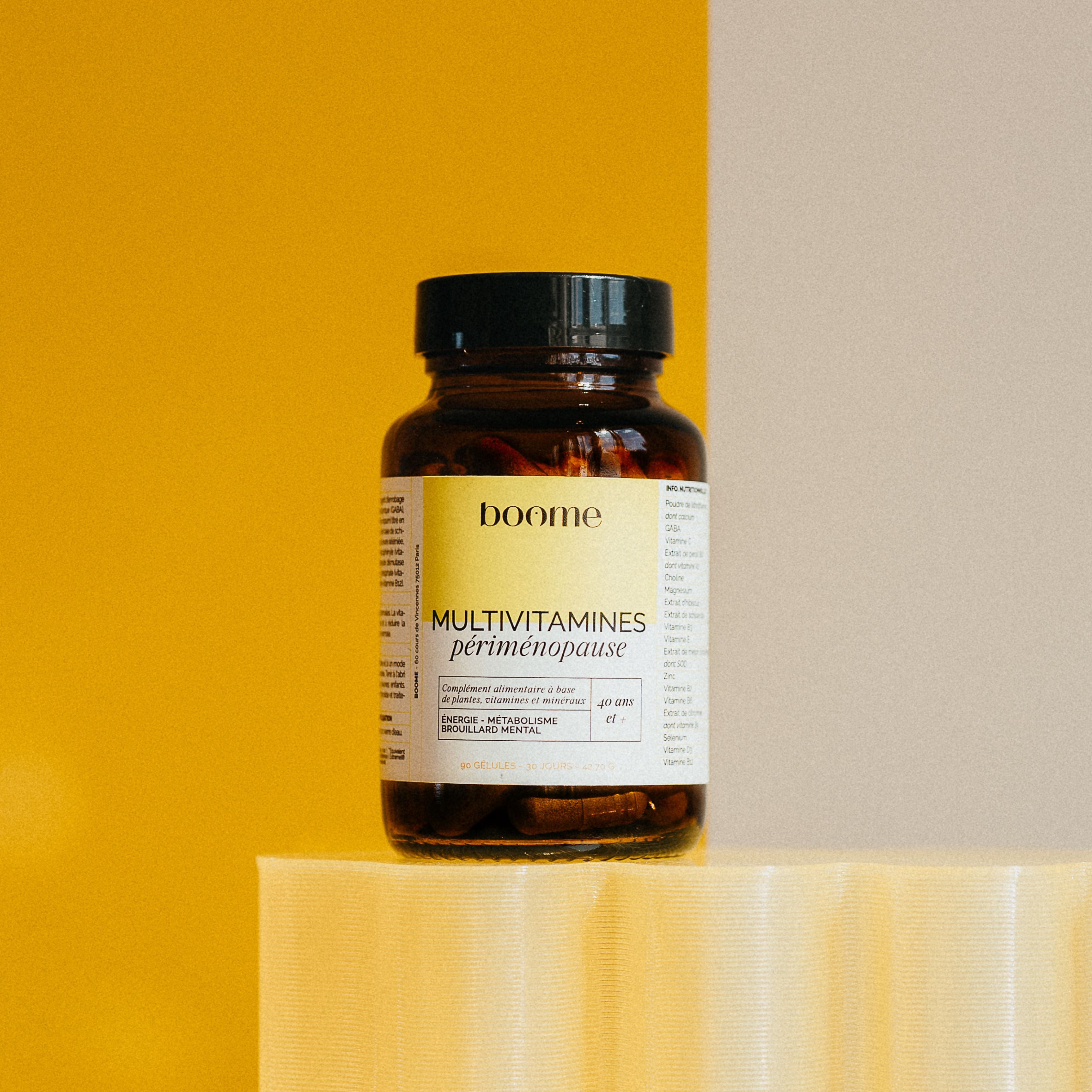
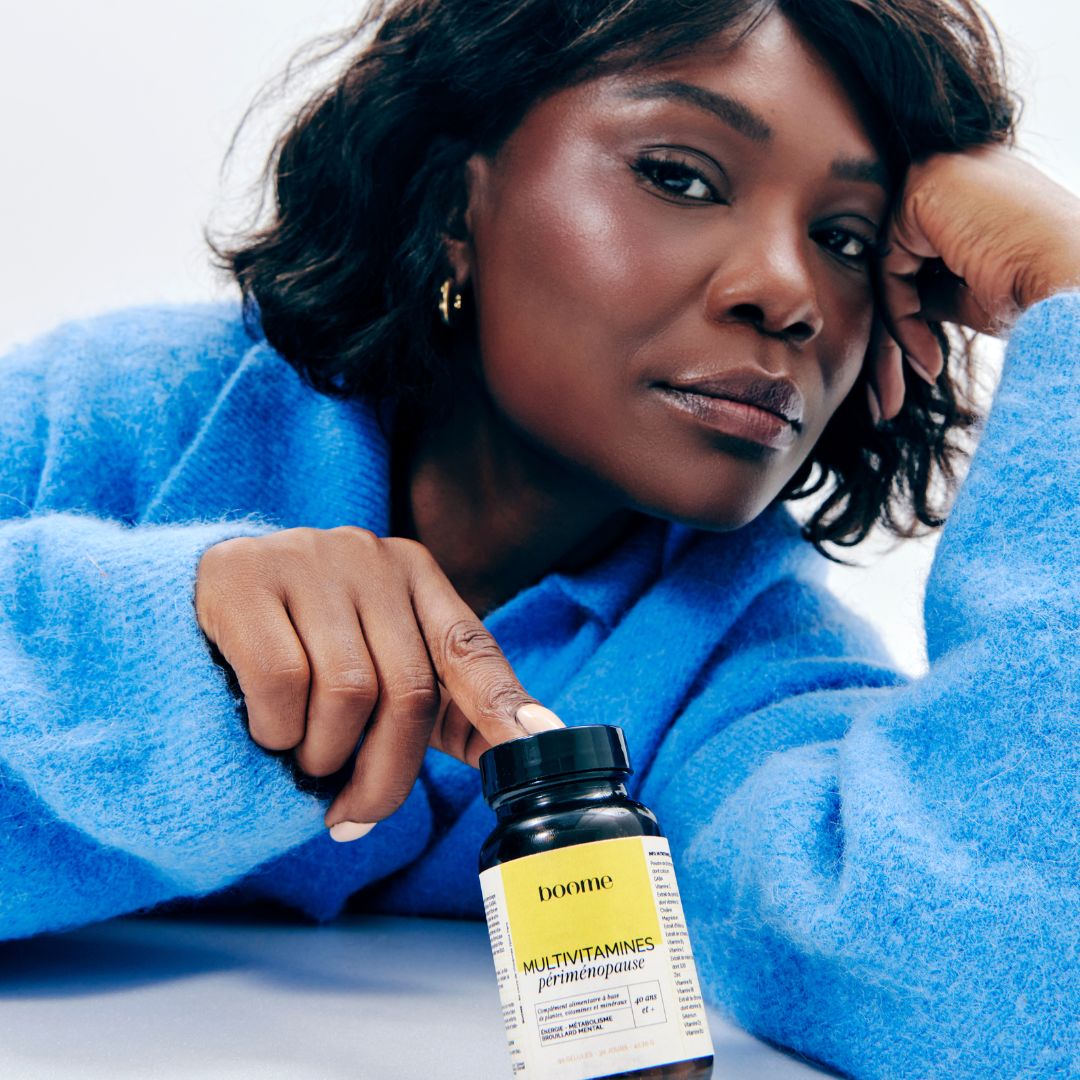
Multivitamines Périménopause
Multivitamines Périménopause est un complément alimentaire sans hormones conçu pour répondre aux besoins spécifiques des femmes, dès 40 ans, en cas de fatigue¹, de brouillard mental² et pour soutenir le métabolisme¹.
Études cliniques
- Livraison offerte à domicile
- -10% tout le temps sur vos autres achats
- Seulement 1,10€ par jour
- Pour une routine sans interruption ni charge mentale
- Engagement 3 mois, puis annulable à tout moment
Pourquoi choisir l'abonnement BOOME ?
Les bienfaits d'une cure se révèlent dans la constance et la durée : l'abonnement BOOME est pensé pour ça !
Votre cure arrive chaque mois, sans charge mentale, et au meilleur prix.
⭐ -15% en permanence
Votre cure au meilleur prix, sans code promo.
⭐ –10 % sur vos autres achats
Envie de tester un autre produit ou de compléter votre routine ? Ajoutez-le à votre prochaine livraison et profitez automatiquement de 10 % de réduction, tout le temps.
🚚 Livraison domicile toujours offerte
Vos essentiels arrivent chez vous, sans frais supplémentaires.
🌿 Une routine qui évolue avec vous
Ajoutez, retirez ou remplacez vos produits n'importe quand, selon vos besoins du moment.
🔄 Le temps d'une vraie cure, puis liberté totale
Après 3 mois (la durée minimale recommandée de nos cures), vous pouvez modifier, mettre en pause ou annuler votre abonnement en quelques clics depuis votre espace client.
🎁 Des surprises dans vos colis
Des attentions glissées régulièrement dans vos livraisons, pour vous remercier de votre confiance.
📚 Des contenus exclusifs
Des conseils d'experts pensés pour vous accompagner à chaque étape de votre vie.
🧠 Une charge mentale en moins
Votre cure arrive chaque mois, sans y penser, sans risque d'oubli.
BOOME DAYS 🎂 -30% sur TOUT LE SITE !
Expédition le jour même (commandes avant 12h)
Frais de port offerts en France dès 100€
Paiement en 3x sans frais avec Alma et PayPal


 Formulé par des professionnels de santé
Également disponible en pharmacie
Composition :
Allégations de santé :
| Informations nutritionnelles | Quantité dose / jour | EPS | AR |
|---|---|---|---|
| Poudre de lithothamne | 380 mg | - | - |
| dont calcium | 120 mg | - | 15% |
| GABA | 100 mg | - | - |
| Vitamine C | 80 mg | - | 100% |
| Extrait de persil | 75 mg | 1500 mg | - |
| dont vitamine K2 | 75 µg | - | 100% |
| Choline | 65,75 mg | - | - |
| Magnésium | 56,25 mg | - | 15% |
| Extrait d'hibiscus | 50 mg | 500 mg | - |
| Extrait de schisandra | 50 mg | 200 mg | - |
| Vitamine B3 | 16 mg | - | 100% |
| Vitamine E | 12 mg | - | 100% |
| Extrait de melon Extramel® | 10 mg | - | - |
| dont SOD | 140 UI | - | - |
| Zinc | 5 mg | - | 50% |
| Vitamine B2 | 1,4 mg | - | 100% |
| Vitamine B6 | 1,4 mg | - | 100% |
| Extrait de citronnier | 4 mg | 40 mg | - |
| dont vitamine B9 | 200 µg | - | 100% |
| Sélénium | 50 µg | - | 91% |
| Vitamine D3 | 5 µg | - | 100% |
| Vitamine B12 | 2,5 µg | - | 100% |
Contre-indications :
Multivitamines Périménopause
Made in France
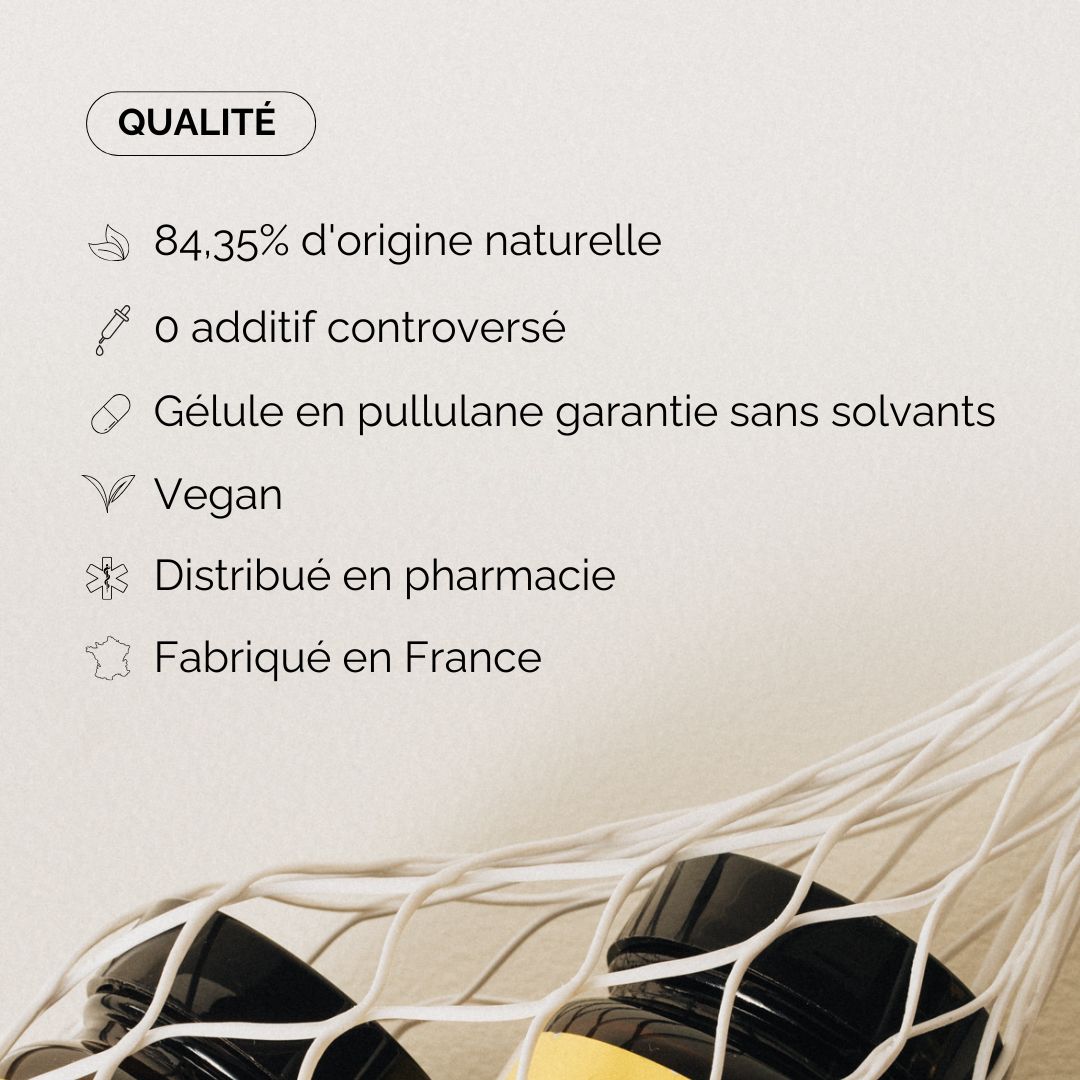
Zéro ingrédient controversé
Extramel® : Une efficacité prouvée sur la sérénité et le sommeil
Ingrédients clés & études scientifiques
Le sourcing est notre priorité, la formulation notre métier. Chaque ingrédient a été sélectionné pour sa qualité et son rôle nutritionnel reconnu et grâce à la lecture de nombreuses études scientifiques (certains actifs sont brevetés). Une formule clean, sans ingrédient superflu ni additif controversé.
La différence Boome
Formules sans compromis
Sans additifs ni ingrédients controversés, sans matières premières douteuses. Nos gélules sont obtenues par fermentation de tapioca et sont sans solvants.
Des experts à nos côtés
Nos formules sont co-formulées par des experts indépendants (gynécologue, pharmacologue, naturopathe etc...) pour vous offrir les meilleures combinaisons d'ingrédients.
Naturalité et qualité
Nos formules sont construites autour d'ingrédients issus de la nature (plantes, fruits, algues, champignons etc...) que nous marions à des actifs développés par la science, et parfois brevetés.
Sécurité
Fabrication française, traçabilité , respect de la règlementation, nous ne laissons rien au hasard. Nos produits finis font l’objet de contrôles aléatoires indépendants.
Prendre soin des autres
Nous reversons une partie de nos bénéfices à des associations qui oeuvrent contre la précarité des femmes. Nous adhérons au 1% for the Planet. Faire un achat Boome, c'est aussi soutenir celles qui en ont besoin.

Fin du flou, place à vous !
FAQ

