



Vitamins for perimenopause, ideal from age 40
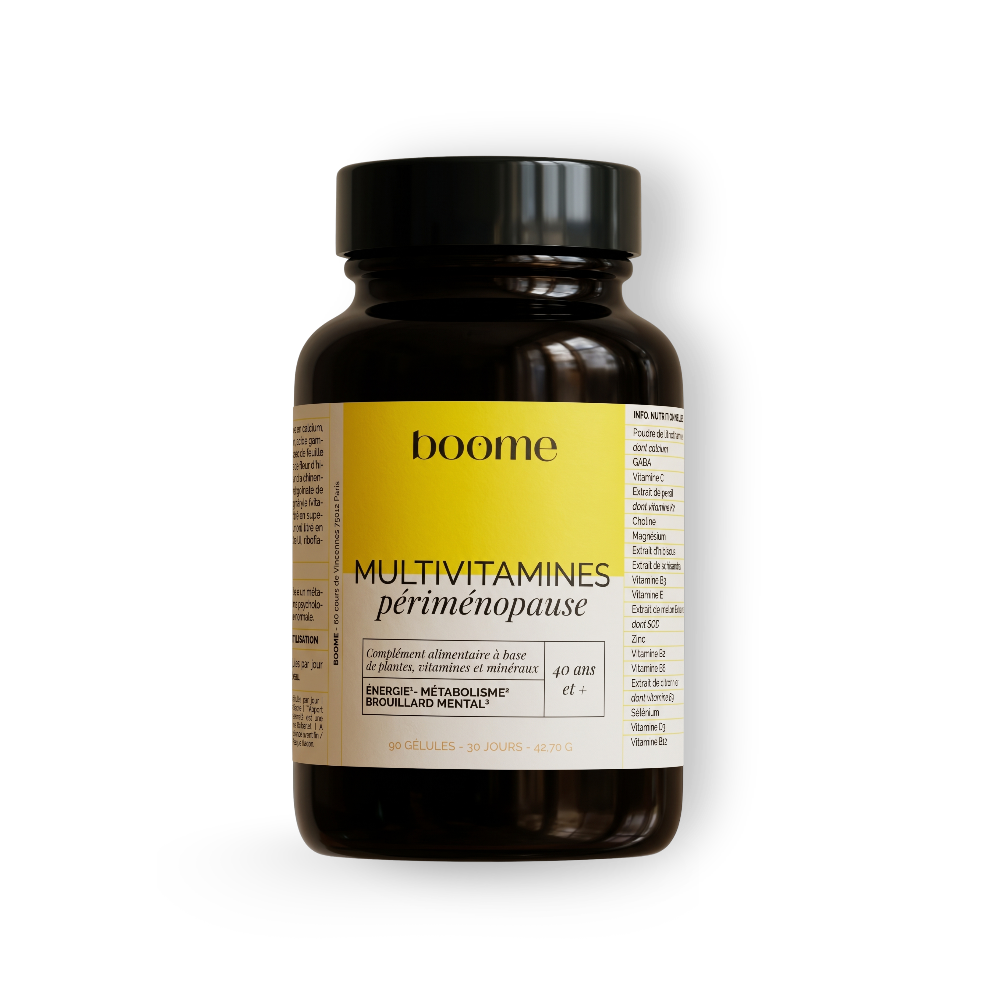
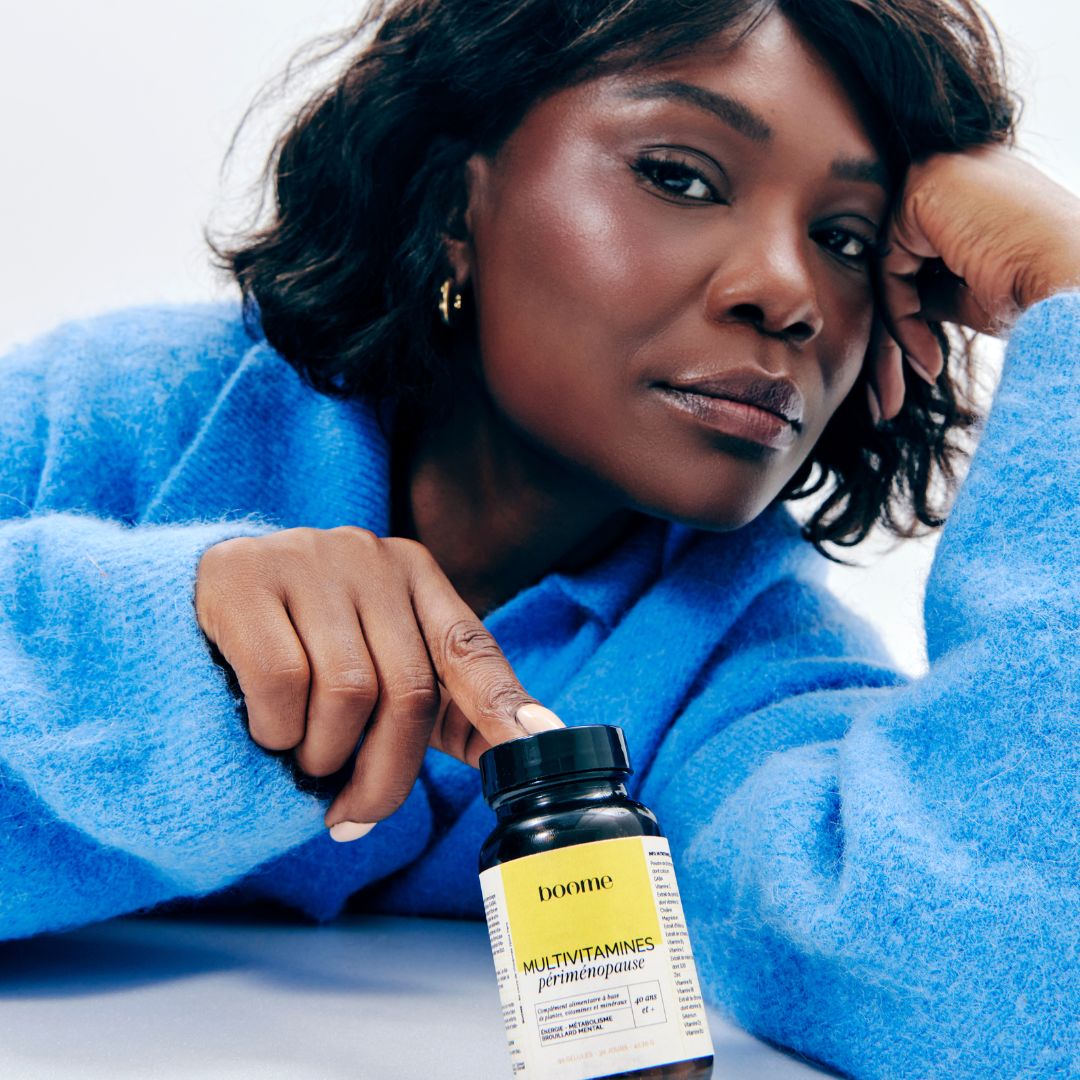
Multivitamines Perimenopause
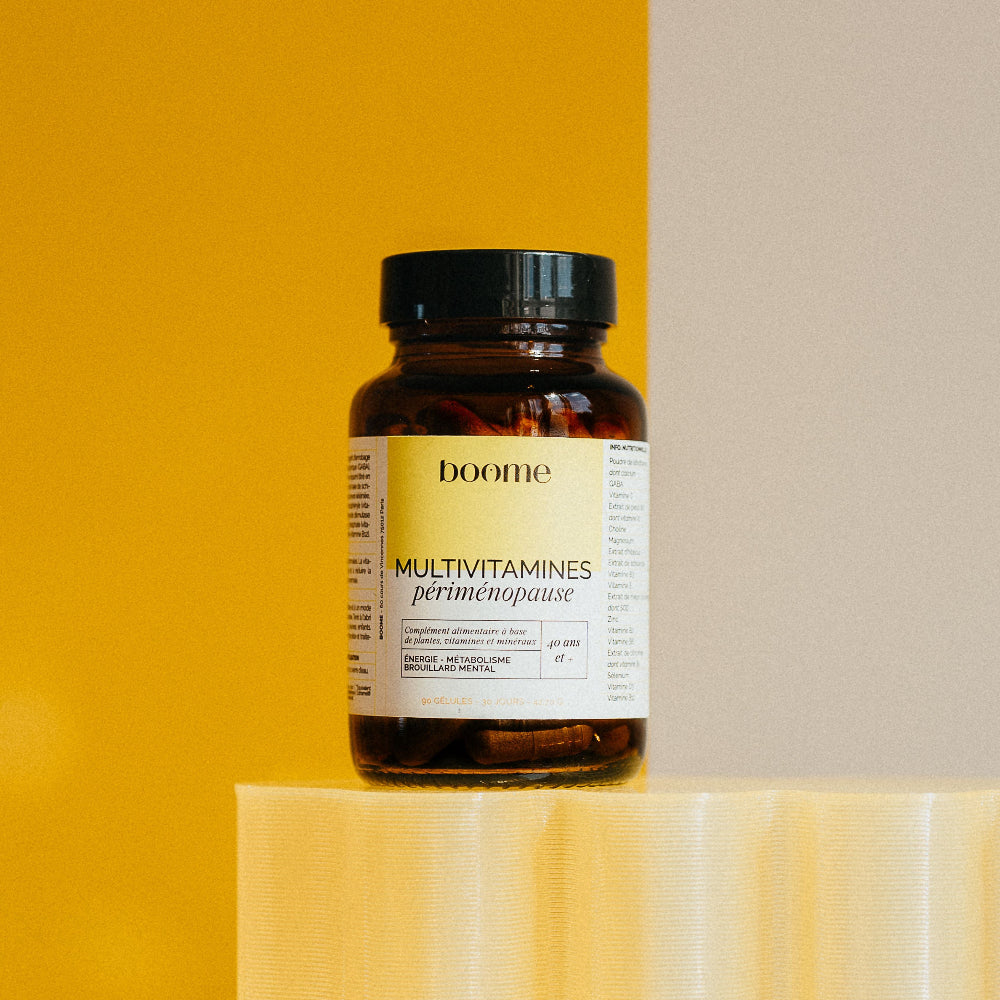
Multivitamines Perimenopause is a hormone-free food supplement designed to meet the specific needs of women aged 40 and over, in cases of fatigue¹, mental fog², and to support metabolism¹.
Clinical studies
- Free home delivery in metropolitan France
- 10% off all your other purchases, all the time
- Only 1,10€ per day
- For an uninterrupted, hassle-free routine
- 3-month commitment, then cancel anytime
Why choose the BOOME subscription?
The benefits of a wellness course come from consistency and duration: that’s exactly what the BOOME subscription is designed for!
Your products arrive every month, hassle-free and at the best price.
⭐ 15% off, always
Your wellness course at the best price, with no promo code needed.
⭐ 10% off your other purchases
Want to try another product or add something to your routine? Add it to your next delivery and automatically enjoy 10% off, every time.
🚚 Free home delivery, always
Your essentials are delivered straight to your door, at no extra cost.
🌿 A routine that evolves with you
Add, remove or swap products at any time, depending on your current needs.
🔄 Enough time for a complete course, then total flexibility
After 3 months (the minimum duration we recommend for our wellness courses), you can modify, pause or cancel your subscription in just a few clicks from your customer account.
🎁 Surprises in your deliveries
We regularly include little extras in your parcels to thank you for your trust.
📚 Exclusive content
Expert advice designed to support you through every stage of your life.
🧠 One less thing to think about
Your wellness course arrives every month, automatically, so you never have to remember to reorder.
BOOME DAYS 🎂 30% OFF SITEWIDE!
Same day shipping (orders before 12pm)
Free shipping in France on orders over €100
3 interest-free payments with Alma and PayPal


 Formulated by healthcare professionals
Also available in pharmacies
Composition:
Health claims:
| Nutritional information | Amount per daily dose | EPS | AR |
|---|---|---|---|
| Lithothamnium powder | 380 mg | - | - |
| of which calcium | 120 mg | - | 15% |
| GABA | 100 mg | - | - |
| Vitamin C | 80 mg | - | 100% |
| Parsley extract | 75 mg | 1500 mg | - |
| of which vitamin K2 | 75 µg | - | 100% |
| Choline | 65.75 mg | - | - |
| Magnesium | 56.25 mg | - | 15% |
| Hibiscus extract | 50 mg | 500 mg | - |
| Schisandra extract | 50 mg | 200 mg | - |
| Vitamin B3 | 16 mg | - | 100% |
| Vitamin E | 12 mg | - | 100% |
| Extramel® melon extract | 10 mg | - | - |
| of which SOD | 140 IU | - | - |
| Zinc | 5 mg | - | 50% |
| Vitamin B2 | 1.4 mg | - | 100% |
| Vitamin B6 | 1.4 mg | - | 100% |
| Lemon tree extract | 4 mg | 40 mg | - |
| of which vitamin B9 | 200 µg | - | 100% |
| Selenium | 50 µg | - | 91% |
| Vitamin D3 | 5 µg | - | 100% |
| Vitamin B12 | 2.5 µg | - | 100% |
Contraindications:
Multivitamines Perimenopause
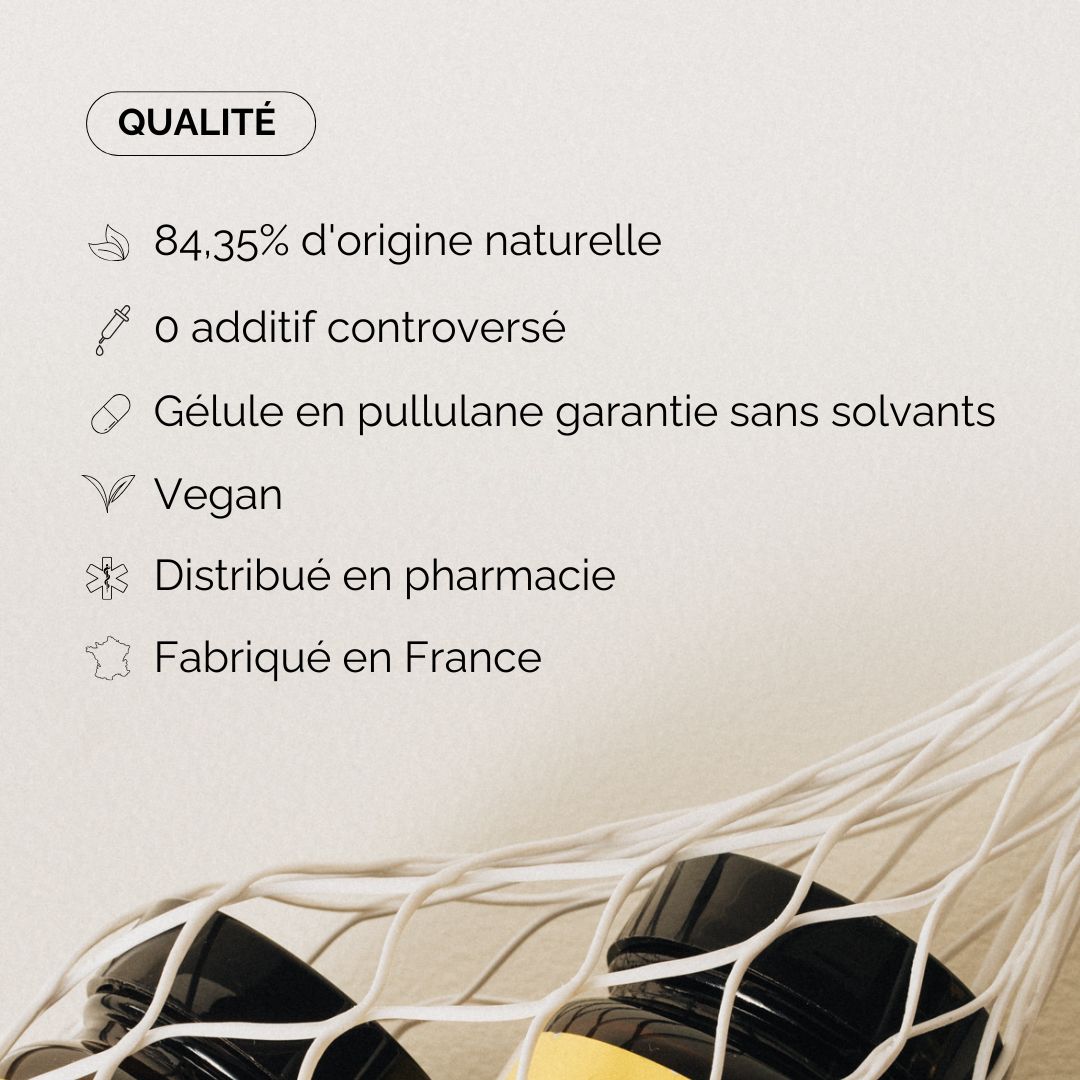
Made in France
Zero controversial ingredients

The time for uncertainty is over, it's your turn!
The Boome difference
Formulas without compromise
No additives or controversial ingredients, no questionable raw materials. Our capsules are obtained by tapioca fermentation and are solvent-free.
Experts by our side
Our formulas are co-formulated by independent experts (gynecologists, pharmacologists, naturopaths, etc.) to offer you the best combinations of ingredients.
Naturalness and quality
Our formulas are built around ingredients from nature (plants, fruits, algae, mushrooms, etc.) which we combine with active ingredients developed by science, and sometimes patented.
Security
French manufacturing, traceability, compliance with regulations, we leave nothing to chance. Our finished products are subject to independent random checks.
Caring for others
We donate a portion of our profits to associations working to combat poverty among women. We are members of 1% for the Planet. Making a Boome purchase also means supporting those in need.
FAQ