


5 summer foods to take care of your body during the preconception period

Sommaire

Summer, the season of juicy fruits, al fresco lunches, and... baby plans. And it's a good thing too, as some foods typical of this period are true allies for fertility.
Pauline Gouth, a dietitian and nutrition expert, recommends 5 gems to include in your daily diet, scientifically proven to increase your chances of pregnancy.
✅ Key takeaways:
- Red fruits protect oocytes.
- Omega-3s support ovulation and couple fertility.
- Green vegetables provide essential folates for conception.
- Oilseeds are true mineral powerhouses.
- Red bell pepper replenishes your cells with protective vitamin C.
- Boome supplements help compensate for silent deficiencies.
🍓 Red fruits: powerful antioxidants for optimal oocytes
Fresh, colorful, tangy... These vibrantly colored fruits are also ultra-rich in anthocyanins, pigments that naturally protect your reproductive cells from cellular damage caused by oxidative stress. These powerful antioxidants thus help neutralize free radicals.
🔬 According to a recent study, anthocyanins help preserve the ability of hormonal cells to function well, even when exposed to intense oxidative stress. [1]
Tips:
- Ideally, pick your organic red fruits yourself or buy them from a local producer, right after harvest. Their antioxidants are at their peak within the first 24-48 hours. After this time, vitamin C and anthocyanin levels drop sharply, even if the fruits still look good on the outside. Fresh foods have a more significant positive impact.
- Consume them raw to preserve their benefits.
- Avoid long cooking times, which destroy anthocyanins.

🐟 Oily fish: Omega-3s for hormones and oocytes
Mackerel, sardines, and salmon (wild preferably) are kings of a rich diet. These fish contain EPA and DHA, two essential fatty acids for oocyte maturation, and female and male fertility.
🔬 A study revealed that Omega-3 supplementation combined with a balanced diet could increase conception chances in women of childbearing age [2].
Tips: Opt for small, wild oily fish (fewer heavy metals). 2 to 3 portions of oily fish per week after gentle cooking (steaming, baking, en papillote).
For animal products, oils like fish oil or cod liver oil help meet the recommended intake of EPA & DHA.
For a more stable and complementary intake: choose Boome's Vegan Omega-3s, derived from microalgae rich in EPA & DHA, they are perfectly dosed and formulated for fertility, pregnancy, and postpartum.
Psst, want to know more? Check out our article on the links between Omega-3s and fertility.
🥬 Leafy greens: folates galore
Spinach, arugula, lamb's lettuce, Swiss chard... These green leaves are mines of folates (vitamin B9), a key nutrient to support oocyte maturation and prepare the body for a future pregnancy.
🔬 A study showed that dietary intake of folic acid positively influenced ovarian reserve in women [3].
Tips: These green leaves should be consumed raw or steamed to preserve vitamin B9. A squeeze of lemon juice increases the digestive absorption of folic acid.
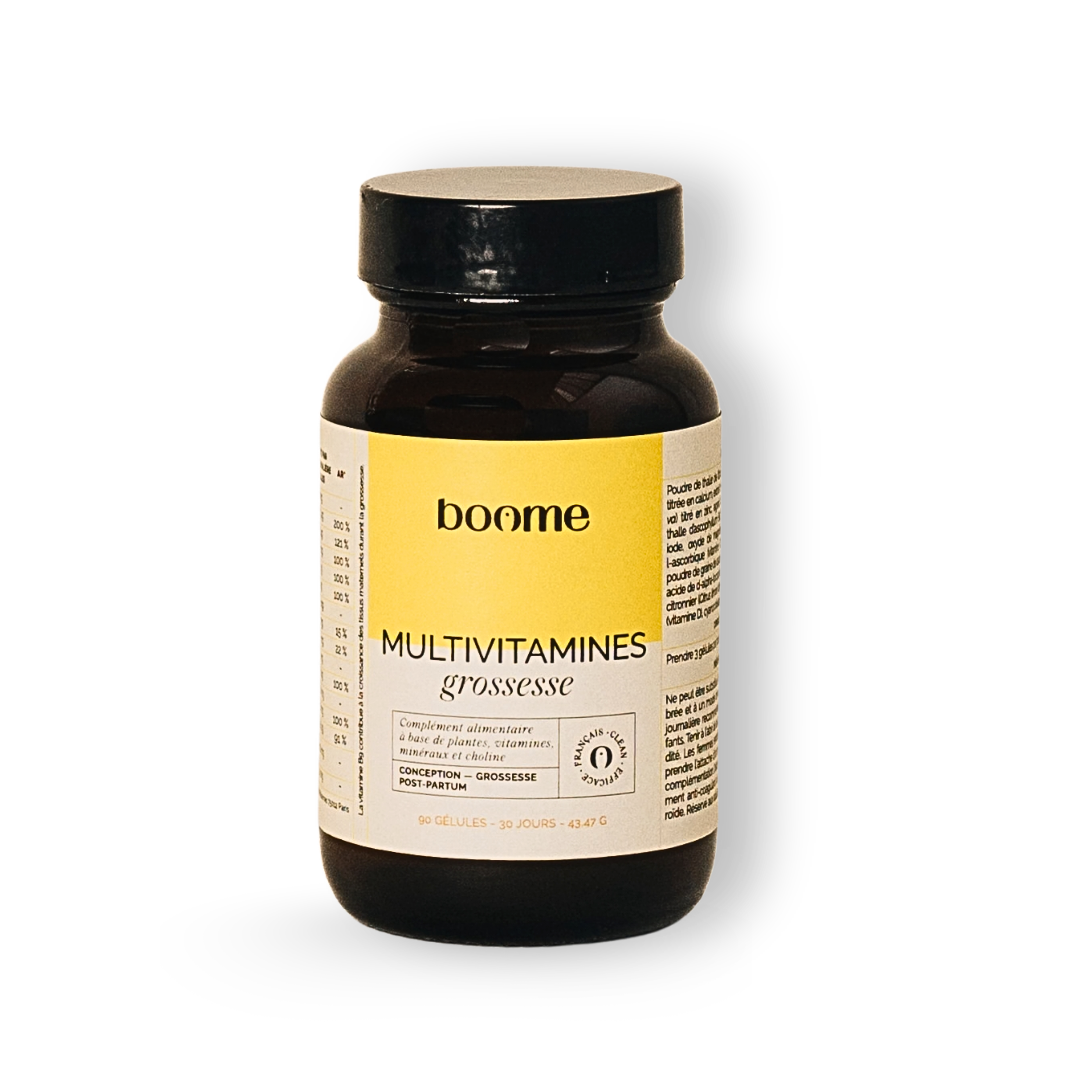
For additional support, Boome's Pregnancy Multivitamins contain natural folates, perfectly absorbable by the body. Folates are also essential to help prevent certain developmental anomalies, particularly in the neural tube of the future baby.
Vitamin B9 and its positive impact, is it a bit of a mystery to you? Not for long! Discover what vitamin B9 is for.
🥜 Nuts and seeds: zinc and selenium for couple fertility
Fortunately, these foods are not at their full potential only in summer. Pumpkin seeds, flax seeds, or oilseeds like walnuts, almonds... these rich foods contain healthy fats and minerals essential for reproduction: zinc (spermatogenesis, ovulation) and selenium (cell protection, thyroid) so we must talk about them!
🔬 A study indicated that zinc and selenium supplementation improved antioxidant parameters in sperm, suggesting a potential benefit for fertility [4].
Tips: A small handful a day (about 30g) is highly recommended. Choose them raw, organic, and unsalted (grilled = loss of nutrients).
🌶️ Red bell pepper: summer vitamin C powerhouse for sperm and ovulation
Crunchy, colorful, ultra-fresh... the red bell pepper is THE summer champion for vitamin C. It contains on average 3 times more than an orange! Vitamin C supports ovulation and helps improve sperm motility and morphology. It also helps combat oxidative stress responsible for many imbalances that can damage oocytes and sperm, and thus directly impact the procreation process (yes, even when everything seems "normal").
🔬 A study showed that vitamin C supplementation, combined with a varied diet, could help improve the quality of sperm production [5].
Tips:
- Eat it raw to preserve all the vitamin C.
- Pair it with a drizzle of olive oil to promote the absorption of certain fat-soluble antioxidants present in the bell pepper.
- Do you digest it poorly? Remove the skin (with a peeler or after a quick bake) and the white seeds inside, which are often responsible for digestive discomfort. A pinch of cumin or fennel as seasoning can also help.
Bell pepper, combined with lean meats and complex carbohydrates like steamed potatoes or legumes, makes for a super fertility plate!
What if eating well isn't enough?
Even with the best possible diet, studies show that essential micronutrient intake is often insufficient today. Why? Mainly due to soil depletion in agricultural areas.
🔬 A European study published in 2023 in Food Chemistry confirms that the essential nutrient content of fresh fruits and vegetables has significantly decreased compared to several decades ago. This decline is linked to several factors such as modern agricultural practices, cultivated varieties, chemicals and environmental conditions, leading to an overall decrease in the nutritional quality of our foods [6].
Conclusion: even a healthy diet can leave invisible nutritional deficiencies, especially during preconception, pregnancy, and postpartum when needs skyrocket.
The solution? Adapted supplements before, during, and after pregnancy, such as Boome's Pregnancy Multivitamins:
- 100% natural origin
- Formulated to support fertility, ovulation, and embryonic development
- Optimized dosages for the key phases of the future mother
In a context where planning a baby is part of a real lifestyle, diet and good habits play a central role. By choosing fresh, colorful, and delicious summer products—not miracle foods, but simply good for your health—you give your baby project the best chances... naturally. 💛
BIBLIOGRAPHY
[1] Zhang, H., Zhang, Z., Liu, Y., Ma, Y., & Shi, J. (2023). Anthocyanins prevent AAPH-induced steroidogenesis disorder in Leydig cells by regulating the cAMP/PKA/CREB pathway. Antioxidants, 12(2), 508. https://doi.org/10.3390/antiox12020508
[2] Gaskins, A. J., Toth, T. L., Wright, D. L., & Missmer, S. A. (2022). Omega-3 fatty acid supplementation and fecundability. Fertility and Sterility, 117(5), 1048–1055. https://doi.org/10.1016/j.fertnstert.2022.01.039
[3] Gaskins, A. J., Mumford, S. L., Chavarro, J. E., Zhang, C., Wactawski-Wende, J., Perkins, N. J., & Schisterman, E. F. (2021). Folate intake and ovarian reserve among women attending a fertility center. Fertility and Sterility, 116(4), 1000–1008. https://doi.org/10.1016/j.fertnstert.2021.06.042
[4] Khan, T. A., Aslam, M., & Qureshi, S. M. (2024). Effect of dietary zinc, selenium and their combination on antioxidant status and fertility in male rats. Journal of Trace Elements in Medicine and Biology, 79, 127329. https://doi.org/10.1016/j.jtemb.2024.127329
[5] Greco, E., Iacobelli, M., Rienzi, L., Ubaldi, F., Ferrero, S., & Tesarik, J. (2005). Reduction of the incidence of sperm DNA fragmentation by oral antioxidant treatment. Journal of Andrology, 26(3), 349–353. https://doi.org/10.2164/jandrol.04146
[6] Van den Broeck, A., Van den Eynde, M., & Van Camp, J. (2023). Nutrient composition of fresh produce—Assessing variability between European countries to substantiate nutrition and health claims. Food Chemistry, 405, 134973. https://doi.org/10.1016/j.foodchem.2022.134973
Sources
Related Products


Produits associés
Read more
What if your menstrual cycle became an ally for your sports practice… rather than an obstacle? Because many women believe that their periods limit their athletic performance. But the truth is, eac...

In the first trimester of pregnancy, nutritional needs change rapidly, even if the bump isn't showing yet. In summer, heat and nausea amplify certain challenges: slowed digestion, risk of dehydrati...

