

Double ovulation: Is it possible to ovulate multiple times during the same cycle?
Sommaire
You may have heard of double ovulation, often shrouded in mystery. Is it really possible to ovulate twice in the same cycle? And if so, what does that mean for your fertility? Whether you're trying to conceive or simply want to better understand the secrets of your menstrual cycle, we're separating fact from fiction about this phenomenon that's more complex than it seems.
What is double ovulation?
Double ovulation (also called hyperovulation) occurs when a woman releases two mature eggs during the same menstrual cycle. Normally, the ovulatory process involves the release of only one egg per cycle, but sometimes, the ovaries have decided otherwise!
This phenomenon results from the action of FSH (follicle-stimulating hormone), which stimulates the maturation of ovarian follicles. In certain cycles, two follicles mature at the same time and each release an egg. Both eggs can be released by the same ovary, or one by each ovary.
An important thing to know: double ovulation does not occur at any time. The two eggs are released within a maximum 24-hour window, which means that we are still talking about a single "fertile period" per cycle. For example, you cannot ovulate once at the beginning of the cycle and a second time two weeks later.
Why do some women have double ovulation?
Double ovulation is not a completely random phenomenon. Several factors can promote its occurrence:
Genetic factors
Some women naturally tend to produce multiple eggs per cycle. This predisposition can be hereditary; if your mother, sister, or grandmother had dizygotic twins ("fraternal twins"), your chances of hyperovulating are slightly higher.
Hormonal factors
A higher-than-normal FSH peak can stimulate the maturation of several follicles simultaneously. This is also what happens during assisted reproductive technology (ART) treatments: the drugs used intentionally stimulate the ovaries to produce multiple eggs, with the aim of increasing the chances of pregnancy.
Age and irregular cycles
Women in perimenopause sometimes see their FSH levels naturally increase, which can cause episodes of hyperovulation. Similarly, women who have recently given birth or who have just stopped hormonal contraception may experience temporarily "unstable" cycles.
Double ovulation and chances of pregnancy: what you need to know
Does double ovulation increase the chances of getting pregnant?
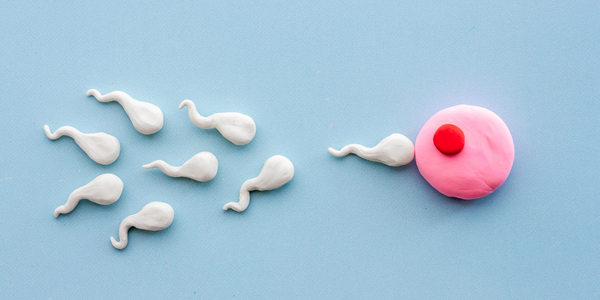
Mathematically, releasing two eggs rather than one provides two fertilization opportunities during the same cycle. This can slightly increase the chances of pregnancy, provided that sperm are present within the fertile window.
Remember that eggs remain viable for only 12 to 24 hours after release. Sperm, on the other hand, can survive for up to 5 days in the female reproductive tract. It is this combined window that determines the most fertile days of your cycle.
Double ovulation and twins: what's the connection?
This is where it gets really fascinating! Double ovulation is directly linked to dizygotic twin pregnancies ("fraternal twins"). When both released eggs are fertilized, each by a different sperm, two distinct embryos develop. These twins share about 50% of their DNA, like typical siblings.
Globally, dizygotic twin births account for approximately two-thirds of all twin births. Identical twins (monozygotic, resulting from a single fertilized egg that divides) are less common, and their occurrence is not related to double ovulation.
Can you get pregnant by two different fathers during a double ovulation?
As surprising as it may seem: yes, theoretically. This phenomenon, called heteropaternal superfecundation, is extremely rare but medically documented. It assumes that the two eggs released during a double ovulation are fertilized by sperm from two different men. This scenario can only occur if two sexual intercourses with two different partners take place within the same fertile window.
How to detect double ovulation?
First and foremost, how do you know if you are ovulating? There are several methods, but not all are suitable for detecting double ovulation.
Are classic ovulation tests sufficient?
This is the question many people ask! And the answer is: not really. Classic ovulation tests (urinary strips) detect the peak of LH (luteinizing hormone), which triggers ovulation. They indicate that ovulation is imminent, but they do not allow you to detect if two eggs are released rather than one.
In practice, if you use an ovulation test during a cycle with double ovulation, you will see a single LH peak, since both eggs are released within a 24-hour window, triggered by the same hormonal peak.
Basal body temperature
Monitoring basal body temperature (body temperature taken every morning upon waking, before any movement) can provide clues. During classic ovulation, a slight temperature increase is observed after ovulation. During double ovulation, some women observe a slightly different temperature profile, but this remains difficult to interpret without experience.
Ovarian ultrasound
The only method that can confirm double ovulation with certainty is ovarian ultrasound, performed by a doctor. It allows direct visualization of maturing follicles and their release. Outside of specific medical monitoring (fertility assessment, ART), few women use it in their daily lives.
Frequently asked questions about double ovulation
Can you ovulate twice in the same cycle?
Yes. This is called double ovulation or hyperovulation. Two mature eggs are released during the same cycle, within a maximum 24-hour window. This phenomenon is rare but well-documented medically.
Is double ovulation hereditary?
Partially. A predisposition to hyperovulation can be genetically transmitted. If dizygotic twins are present in your maternal family, your chances of double ovulation may be slightly increased.
Does double ovulation double the chances of getting pregnant?
It offers two opportunities for fertilization within the same fertile window, which can slightly increase the chances of pregnancy. But pregnancy remains conditioned by many other factors: egg quality, sperm motility, uterine receptivity.
Can double ovulation be detected with a classic ovulation test?
No. Classic ovulation tests detect the LH peak that triggers ovulation, but do not indicate whether one or two eggs are released. Only an ovarian ultrasound can confirm it.
What is the difference between dizygotic and monozygotic twins?
Dizygotic twins ("fraternal twins") result from the fertilization of two distinct eggs, a phenomenon linked to double ovulation. They share about 50% of their DNA. Monozygotic twins ("identical twins") result from the division of a single fertilized egg and share 100% of their DNA. Double ovulation is not involved in monozygotic pregnancies.
Can double ovulation occur for several cycles in a row?
Yes, some women hyperovulate recurrently. This is not a medical anomaly; it is simply a particularity of their ovarian function, often linked to naturally higher FSH levels.
This article is for informational purposes only and does not constitute medical advice. Consult your doctor or midwife for personalized advice on your fertility and menstrual cycle.
Sources
Read more

Girl or boy? Your baby's sex is determined at fertilization by the chromosome carried by the sperm. But to be certain, you'll have to wait until the 5th-month morphological ultrasound or, in some s...
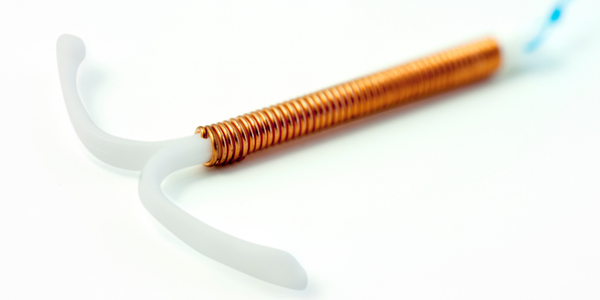
The copper IUD is one of the most reliable contraceptives on the market. But "almost foolproof" doesn't mean foolproof. What happens when it fails anyway? We answer all the questions you dare not s...