


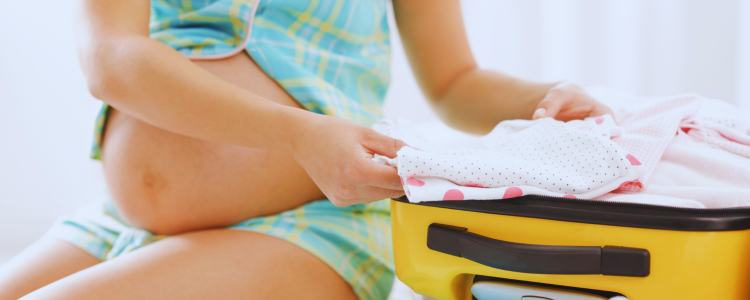
The maternity suitcase: its preparation and essentials
Sommaire

The arrival of a baby is a joyful yet intense event, requiring meticulous preparation! And your hospital bag is clearly your best ally to approach this period with serenity. It contains everything you need for childbirth, your stay at the maternity ward, and your return home. But when should you pack it? And what exactly should you put in it? Don't panic. We'll tell you everything! In this article, discover how to effectively prepare your hospital bag, making sure you don't forget anything for you and your baby. Let's go!
What is a hospital bag?
The hospital bag is much more than just a suitcase! It is the essential item that will accompany you during one of the most intense moments of your life: your first days as a future mother. This bag therefore symbolizes the beginning of a new adventure. Consequently, inside, you will place everything you deem important to make your hospital stay as comfortable and reassuring as possible. Both for you... and for your baby!
We often imagine a small, light suitcase that we would carry under our arm. But no, not at all. The maternity bag, in general, is also the baby's bag. It contains items for the delivery room, clothes for you and your newborn, care products... and essential administrative documents. Each item will be important, whether to meet your immediate needs right after childbirth, or those of your child. The idea is that you have everything you need from the very first moments.
Why prepare your hospital bag in advance?
Spoiler alert: packing a travel bag between two contractions will not be an easy thing to do. That's why we advise you to prepare your hospital bag in advance. No need to start 6 months in advance, of course! But by preparing it in the weeks leading up to your delivery, you can reduce your stress and clear your mind.
Yes, knowing that your bag is ready, with all the necessary items carefully chosen and organized... Believe us, you will give yourself significant peace of mind at the end of your pregnancy! And you will especially avoid last-minute rushing, which could lead you to forget essential items (like your ID card, for example).
When to pack your hospital bag?
We advise you to pack your bag around the 34th week of pregnancy. This timing ensures that everything is ready well before your baby's due date, even in case of premature birth. Conversely, try not to delay beyond the 36th week, as the last two weeks can be unpredictable. And sometimes, you might give birth sooner than expected!
This short preparation period allows you to buy or order all the necessary items you don't already have at home. And to assess what you already own. This will give you time to quietly think about what you will really need at the hospital for you and your baby, without the last-minute pressures. Of course, the co-parent can also lend a hand and help you prepare the maternity bag, thinking about the items they also wish to take.
Hospital bag essentials
So, what should your hospital bag contain? We've made a list of essentials for the delivery room, your stay at the maternity ward, and your return home.
For you, the expecting mother, remember to bring:
- A bathrobe or nightgown that is easy to open, if you plan to breastfeed.
- A pair of socks (if it's winter) to keep your feet warm during labor.
- A facial mist and a sponge to refresh yourself.
- Snacks and a bottle of water.
- Your administrative documents (ID card, health insurance card, medical file, etc.).
For your baby, you can bring:
- A newborn outfit with a cotton bodysuit, a hat, and socks.
- A small blanket or a sleeping bag/nest, depending on the season, to keep your baby warm from birth.
The co-parent or companion can pack:
- Snacks and water to last through labor, which can be long.
- A camera or their cell phone to capture the first moments.
- Comfortable clothes, especially if they plan to stay with you throughout your stay.
For your stay at the maternity ward
To be at your best during the first few days after delivery, remember to pack in your bag:
- Comfortable nursing nightgowns or pajamas, if that's your choice.
- Nursing bras (if needed).
- Nursing pads (if needed).
- Comfortable underwear and specific post-partum sanitary pads.
- Disposable underwear.
- A pair of slippers.
- Towels.
- A toiletry bag with your essentials (toothbrush, hairbrush, etc.) and your favorite beauty products.
- A comfortable outfit (or several if you're staying for a few days).
- A nursing pillow which can also be very useful for comfortably supporting the baby while you breastfeed or bottle-feed.
- A small lamp with soft light, for breastfeeding or bottle-feeding at night.
- Our post-partum products to take care of yourself from day one!
For the baby, you can add:
- Several changes of clothes (bodysuits, pajamas, bibs).
- A pack of diapers in their size.
- Baby toiletries (liniment, physiological saline, cotton pads, sterile compresses, etc.)
NB: in general, all maternity wards have these items. So if you forget them, don't panic! They will provide them without any problem.
- A hooded towel.
Your companion can put in their bag:
- Toiletries.
- A baby wrap.
- A phone charger.
- A dirty laundry bag.
- Snacks and drinks to avoid going back and forth to the vending machine.
- Reading material for quiet moments.
This article might also interest you: Grandma's tricks to predict when you'll give birth
For the journey home
Is it time to go home? Yay! To facilitate your baby's transition to your home, remember to prepare for them:
- An outfit adapted to the season for the journey (a snowsuit if it's cold, or a light bodysuit if it's hot).
- A well-installed car seat to transport them safely.
- A blanket to keep them warm during the journey.
- A comforter or a soft small toy to attach to their seat to reassure them.
- Travel diapers if they need to be changed before you arrive.
For you, the parents, pack a small travel bag with:
- Snacks and water for the journey, especially if the maternity ward is far from your home.
- A pouch of important documents to facilitate your departure from the maternity ward (family record book, mutual insurance card, social security card, etc.).
- A list of emergency contacts, including the pediatrician's and maternity ward's numbers for any post-partum questions.
There you go, now you know what to put in your hospital bag. And believe us: preparing it well is key to experiencing your baby's arrival with tranquility (and lots of joy, of course). We wish you the sweetest encounter with your little one!

Sources
Related Products



Produits associés
Read more

There are some little gems to consume before, during, and after pregnancy. Omega-3s are one of them. Essential fatty acids, necessary for the proper functioning of the human body, they are extre...

Omega-3s are essential fatty acids that the body cannot synthesize on its own. They come in three forms: ALA (of plant origin), EPA, and DHA (found in fatty fish and microalgae). Recognized by A...

